Field manual · September 9, 2026
Castle Busters Upgrade Materials: Tiers and Spend Checks
See the published material path from wood and stone to diamond and magma, then check which upgrade system matches the problem in your next battle.
The official site confirms that material tiers begin with wood and stone and advance to diamond and magma, but it does not publish costs or one best order. Match one visible upgrade to the problem you observed, record the current tier and cost, then stop if the same failure returns.

Field order
Confirm the published material path
The official upgrading section says the material path starts with wood and stone and advances to diamond and magma. Those are published endpoints and examples, not a complete tier table.
The public page does not list the cost, quantity, account stage, or unlock condition for each tier. Read those values from the current client before spending, and do not carry a value from another account into your own plan.
Field order
Match the upgrade system to the problem
Castle Busters publishes several places where resources can matter. Castle upgrades improve durability and defensive options. Unit upgrades unlock perks and power spikes. Wheels change castle movement, while helper items provide offensive or defensive tools.
The table is a checking order, not an official tier list. Choose the row that matches the first failure you can see, inspect the live value, and change one system before comparing another battle.
| Observed problem | System to inspect | Published purpose | Keep unknown until shown |
|---|---|---|---|
| Castle breaks while useful units remain | Castle upgrade | Durability and stronger defensive options | Cost, gain and best structure |
| A unit has an available upgrade | Unit upgrade | Perks and power spikes | Next breakpoint and cost |
| Castle cannot reach a useful angle | Wheel set | Movement with attributes such as speed and fuel | Exact stats and Forge gate |
| One battle needs an extra tool | Helper item | Offensive gadgets or defensive boosts | Exact effect, inventory and drop chance |
Field order
Read Forge as a source, not a drop table
The official feature page says new wheel sets come through the Forge and that offensive and defensive helper items are earned there too. It does not publish Forge gates, reset rules, recipes, chances, or a collection sequence.
Check the current Forge screen before claiming that an item is available. For wheels, compare the attributes the client actually displays, such as speed and fuel, against the movement problem you recorded.
Field order
Separate material tier from spend priority
A later material tier describes progression, but it does not prove which system deserves the next purchase. The official page asks players to reinforce the parts that matter most; it does not publish a universal order for units, structures, wheels, or helper items.
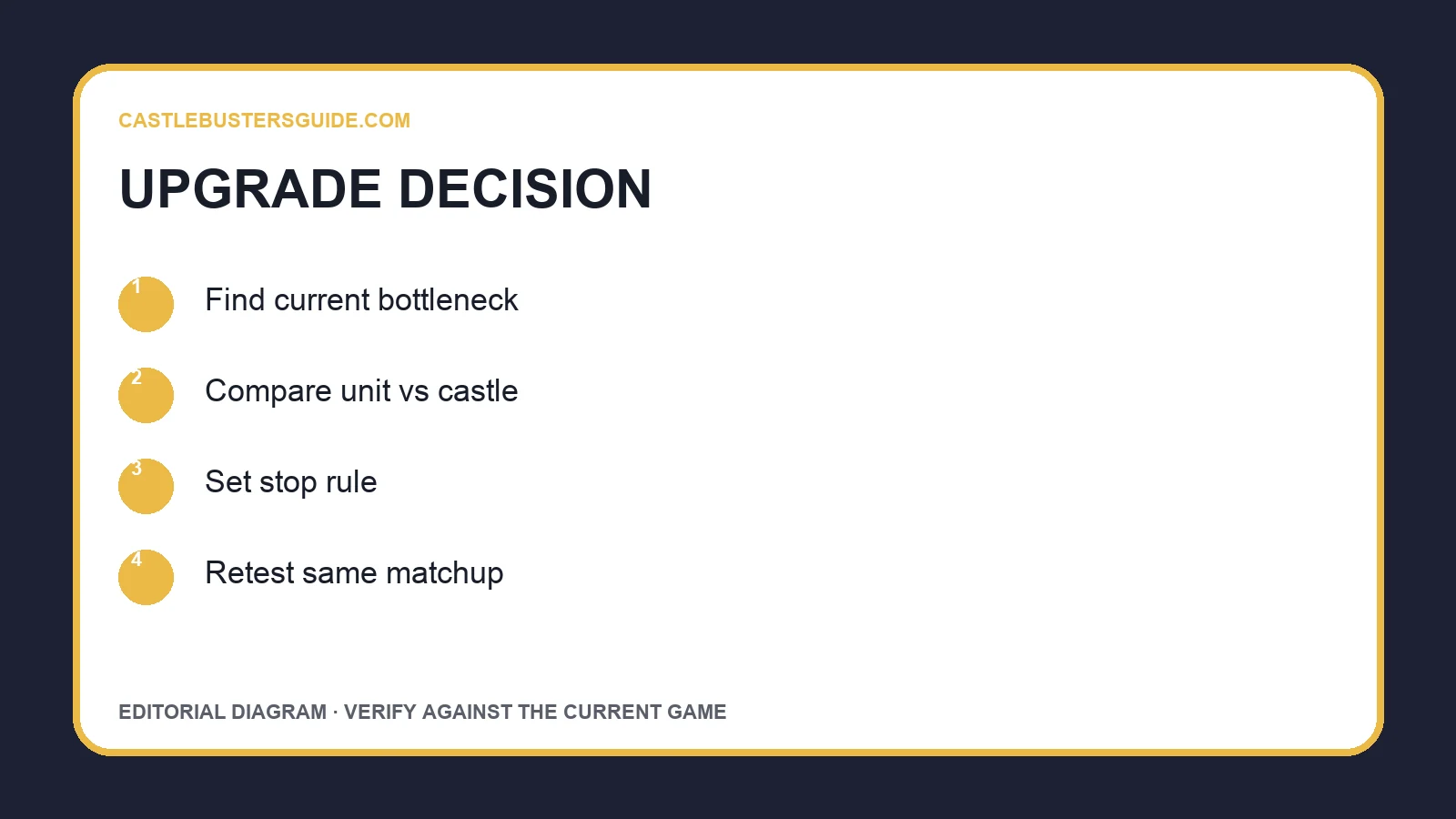
Use one controlled comparison. Record the first decisive failure, buy the smallest visible change that could affect it, and replay a comparable battle. This is an editorial test procedure, not a claim that one upgrade is always optimal.
Field order
Capture four fields before spending
Write down the system, the visible material tier, the displayed cost, and the failure you want to change. After the next battle, add the first unit lost, the castle condition, and whether the original failure moved earlier or later.
If a different opponent or formation makes the comparison unclear, label the result partial. One win can justify keeping a test candidate; it cannot establish a universal priority for every account.
Field order
Stop at the first unknown
Keep current wood income, exact building costs, tier unlock stages, unit stop levels, Forge probabilities, and a universal best investment order unknown unless the current client or a dated official source supplies them.
If the live menu differs from this page, save the visible label and date. Do not substitute an older video, search snippet, or another player's number for the missing value.
Field order
When to update this page
Recheck this guide when the official upgrading or Forge descriptions change, when a patch changes the economy, or when the current client shows a different material path. A layout change by itself does not prove that costs or priorities changed.
The useful result is a dated account observation: current tier, visible cost, selected system, and the battle outcome after one change. That evidence can support a later update without turning one account into a global rule.
Records